Hello there, future nursing superstar! Have you ever dreamed of using your amazing nurse brain in a whole new way? Maybe you love helping people, but your feet hurt, you’re tired of working weekends, or you just want a change of pace.
Guess what? Being a nurse doesn’t always mean working in a busy hospital room. There is a whole, gigantic world of non bedside nursing jobs: local and remote opportunities waiting just for you! Think of it like this: you have a special key (your nursing license), and it can open many different doors, not just the one to a hospital room.
This guide is your treasure map. We’re going to explore all those exciting doors together. We’ll talk about why nurses leave the bedside, who should consider these jobs, and list tons of cool careers. So, grab a comfy seat and let’s dive in!
What Are Non-Bedside Nursing Jobs?
What Does Bedside Nursing Mean?
Bedside nursing is probably what you picture in your head when you think of a nurse. These are the nurses who work right next to the patient’s bed. They take temperatures, start IVs, give medicine, and help doctors. They work in hospitals, usually in busy units like the emergency room or the ICU. It’s a tough job that requires a lot of energy, both in your body and in your heart.
What Qualifies as a Non-Bedside Nursing Job?
A non-bedside nursing job is any job where a nurse uses their nursing knowledge but doesn’t have to do that hands-on care 12 hours a day. You might work in an office, a school, a company, or even your own home! You’re still a nurse, and your skills are super important, you’re just using them in a different way. These jobs are sometimes called “non-clinical” or “alternative nursing careers.”
Why Are More Nurses Switching to Non-Clinical Roles?
Lots of nurses are looking for a change. They still want to be nurses, but they also want things like:
- Sleeping at night.
- Having weekends off to be with family.
- Less stress on their bodies.
- A new challenge that uses their brain in different ways.
And the good news? The world needs these nurses more than ever! Hospitals, insurance companies, and even tech startups are all looking for nurses to help them out.
2. Why Nurses Are Leaving Bedside Nursing
Let’s be honest. Bedside nursing can be really, really hard. It’s like running a marathon every single day. Here’s why so many amazing nurses are deciding to take their talents somewhere new.
2.1 Burnout in the Healthcare Industry
Imagine working a 12-hour shift without even getting a chance to sit down or eat a proper lunch. That’s a normal day for many bedside nurses.
- Long Shifts: Those 12-hour shifts can be exhausting. Your body gets tired from all the walking and lifting.
- Emotional Exhaustion: Nurses care so much. They hold a patient’s hand during sad times and celebrate the happy ones. Feeling that much for other people all the time can make you feel empty inside. This is called compassion fatigue.
- Staffing Shortages: Sometimes, there just aren’t enough nurses to take care of all the patients. This means more work for everyone, which makes the job even harder.
Question: Why is nurse burnout increasing?
Answer: Nurse burnout is going up because of longer hours, more patients per nurse, and the emotional weight of the job. It’s like a sponge that’s soaked up too much water—it just can’t hold anymore.
2.2 Better Work-Life Balance
This is a huge reason nurses look for non-bedside jobs. Think about your perfect day. Does it include having dinner with your family every night? Or maybe going to a yoga class on a Saturday morning?
- Regular Schedules: Many non-bedside jobs are 9-to-5, Monday through Friday. No more working on Christmas or missing your kid’s school play!
- Less Physical Stress: Your body gets a break! You’re not on your feet for 12 hours straight, which is great for your back, knees, and feet.
Question: Are non-bedside nursing jobs less stressful?
Answer: For many nurses, yes! While they have their own challenges (like deadlines or tough meetings), they don’t have the same life-or-death, fast-paced stress of a hospital floor. It’s a different kind of stress, often a lot calmer.
2.3 Career Growth and Higher Salaries
Some nurses worry that leaving the hospital means they won’t make as much money. But that’s not always true!
- New Opportunities: There are amazing jobs in big companies, insurance, and even technology that pay really well.
- Using Your Brain: These jobs let you grow in new ways. You might become an expert in computers, law, or business, all while using your nursing knowledge.
Question: Can nurses earn more outside the hospital?
Answer: Yes, they absolutely can! Some non-bedside jobs, like working for a big insurance company or as a nurse educator, can pay just as much, or even more, than a hospital job.
3. Who Should Consider Non-Bedside Nursing Jobs
Is this the right path for you? Let’s see if any of these sound familiar.
- Nurses Experiencing Burnout: If you wake up dreading your shift, it might be time for a change.
- Nurses with Injuries or Physical Limitations: If your body is telling you it needs a break from all the lifting and standing, desk jobs can be a lifesaver.
- Nurses Interested in Business, Technology, or Education: Do you love solving computer problems? Or maybe you dream of teaching new nurses? There’s a non-bedside job for that!
- New Nurses Exploring Alternative Paths: You don’t have to start in a hospital! Some new graduates go straight into these other roles.
Question: Can new nurses start in non-bedside roles?
Answer: It depends on the job. Some, like a nurse health coach or working in a clinic, might be possible for new grads. Others, like a legal nurse consultant, usually want you to have a few years of experience first. But don’t worry, there are plenty of options to explore right away!
4. Top Non Bedside Nursing Jobs (Detailed List)
Okay, here’s the fun part! Let’s explore some of the coolest jobs out there.
4.1 Nurse Case Manager
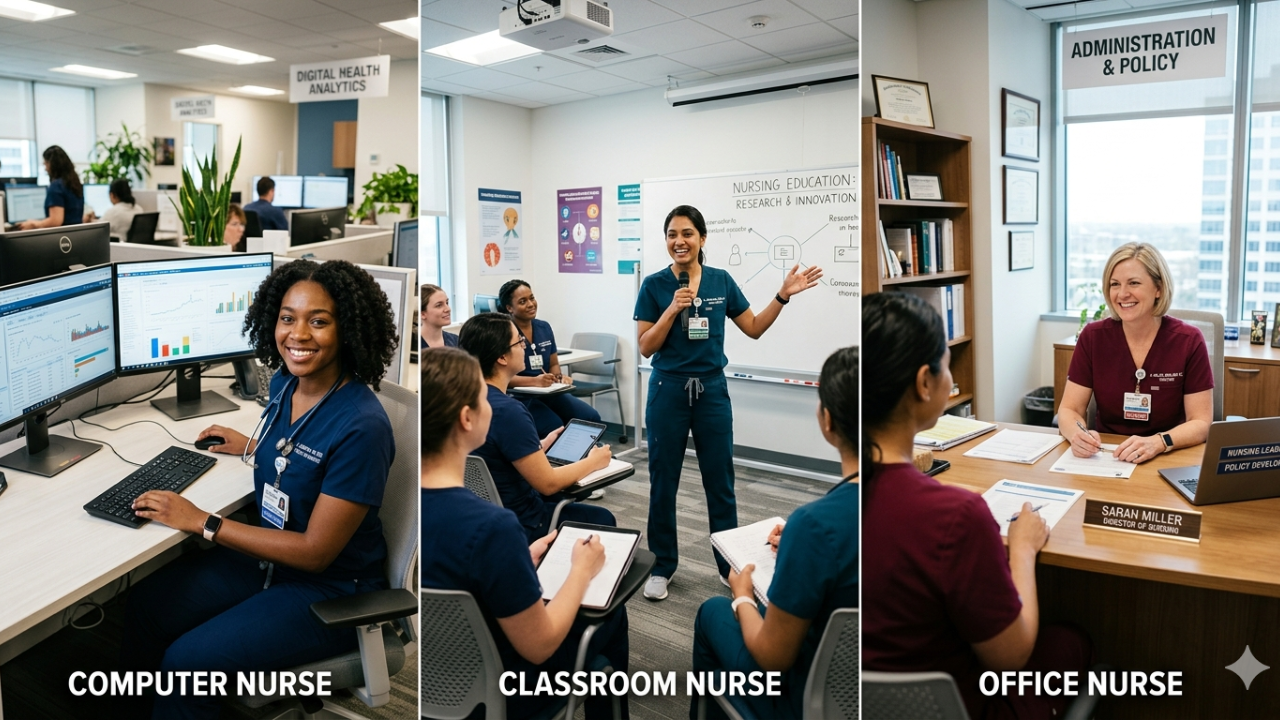
Imagine being a detective and a helper all rolled into one. That’s a nurse case manager. They work with patients who have big health problems to make sure they get all the care they need. They talk to doctors, insurance companies, and the patient’s family to create a big plan.
- Daily Duties: They spend a lot of time on the phone and computer, making appointments, checking on patients, and solving problems.
- Work Environment: Mostly in an office or even at home. They work regular business hours.
- Average Salary: Around $82,000 to $93,000 per year, but can go higher with experience.
- Required Qualifications: You need an active RN license. A Bachelor of Science in Nursing (BSN) is often preferred.
Question: What does a nurse case manager do daily?
Answer: Every day, they check on a list of patients, make phone calls to see how they’re doing, arrange for them to see specialists, and work with insurance to make sure treatments are covered.
4.2 Nurse Educator
Do you love teaching others? A nurse educator gets to teach new nurses or even experienced nurses who want to learn new things. They work in nursing schools, colleges, or hospitals.
- Work Environment: Classrooms, simulation labs (where students practice on mannequins), and offices.
- Average Salary: Around $86,000 to $102,000 per year.
- Required Qualifications: You will usually need a Master of Science in Nursing (MSN). To teach at a big university, you might even need a Doctor of Nursing Practice (DNP).
Question: How do you become a nurse educator?
Answer: First, you become an RN and get some experience. Then, you go back to school to get your master’s degree in nursing education. After that, you can start applying to teach!
4.3 Nurse Informaticist
This job is for nurses who love computers and data. A nurse informaticist is the bridge between the nurses on the hospital floor and the technology they use, like the computers where they type in patient information.
- Work Environment: Often in an office, but they spend time talking to nurses and IT people. Some can work remotely.
- Average Salary: Around $98,000 per year.
- Required Qualifications: An active RN license and a BSN are musts. Experience with electronic health records (EHRs) is key, and a master’s in nursing informatics is a huge plus.
Question: What skills are required for nursing informatics?
Answer: You need to be a good nurse, first of all. Then, you need to love problem-solving with computers, be good at explaining tech stuff to people, and pay close attention to details.
4.4 Telehealth Nurse
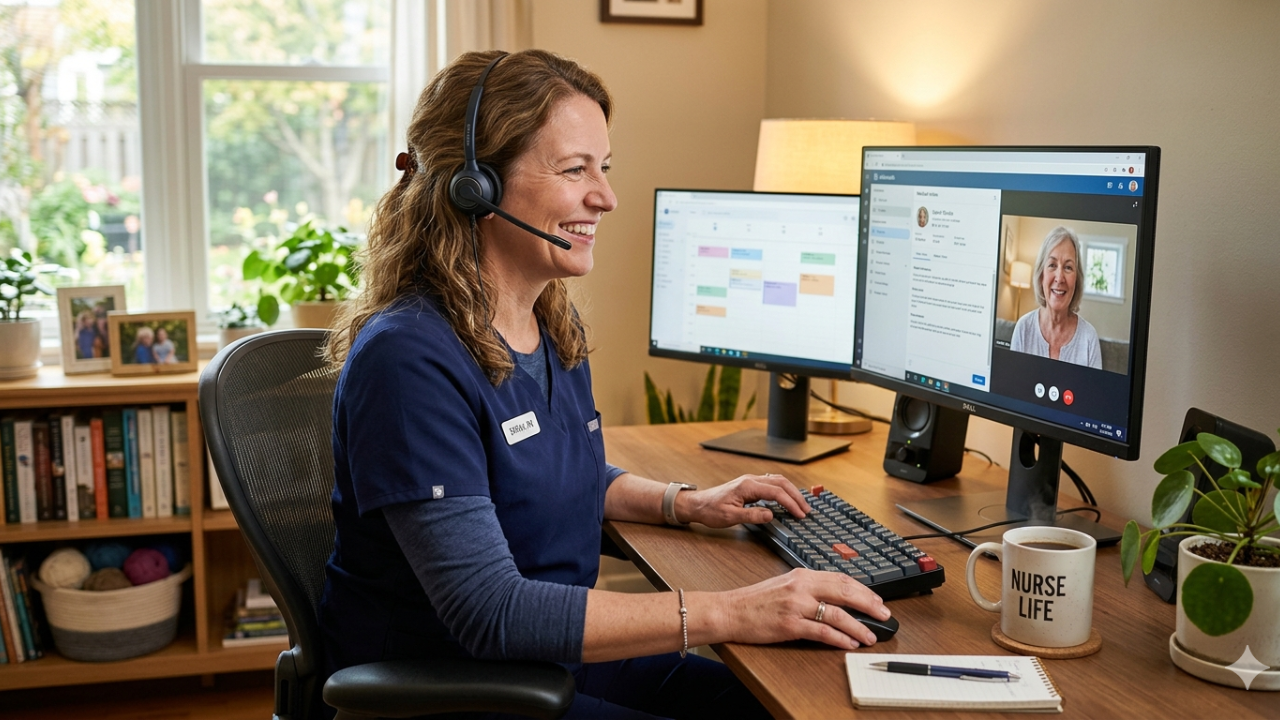
Imagine helping patients from the comfort of your own home! Telehealth nurses talk to patients on the phone or through video calls. They answer questions, help people decide if they need to go to the doctor, and give advice.
- Work Environment: Almost always remote! You just need a computer, a headset, and a quiet place to work.
- Average Salary: Around $95,000 per year.
- Required Qualifications: An active RN license and good communication skills are a must. Experience in areas like the ER or doctor’s offices is very helpful.
Question: Can nurses work from home?
Answer: Yes! Telehealth nursing is one of the most popular ways for nurses to work from home. You get to use all your nursing knowledge without putting on scrubs.
4.5 Legal Nurse Consultant
This is like being a nurse detective for lawyers! Legal nurse consultants work with law firms to help them understand the medical parts of a court case. They read through medical records and figure out if the care a patient got was right or wrong.
- Work Environment: Usually in a law office or from home, reviewing documents.
- Average Salary: Around $90,000 per year.
- Required Qualifications: You need to be an RN with several years of experience. Getting a special certificate can also help you get started.
Question: How do nurses enter the legal field?
Answer: You can start by taking a course to become a legal nurse consultant. Then, you can network with lawyers and let them know you can help them with their medical cases.
4.6 Nurse Health Coach
Do you love teaching people how to live healthier lives? A nurse health coach works with people to help them make good choices. They might help someone with diabetes learn to eat better, or help someone else find ways to exercise more.
- Work Environment: This can be in a gym, a doctor’s office, or even online through video chats.
- Average Salary: This can vary a lot, from around $70,000 to $80,000 or more, depending on if you work for a company or yourself.
- Required Qualifications: An RN license is great. Getting a health coach certification is also a fantastic idea.
Question: Is health coaching a good career for nurses?
Answer: Absolutely! Nurses are already teachers at heart. Health coaching lets you focus on prevention and helping people feel their best, which is very rewarding.
4.7 Nurse Recruiter
Do you love meeting new people and helping them find the perfect job? Nurse recruiters work for hospitals or special companies that hire nurses. They find qualified nurses, talk to them about jobs, and help them get hired.
- Work Environment: Mostly in an office, on the phone and computer.
- Average Salary: Around $72,000 per year.
- Required Qualifications: Being an RN is a huge advantage because you understand what other nurses do. A degree in human resources can also help.
Question: Do you need HR experience?
Answer: Not always. Many companies love to hire nurses first and teach them the recruiting part, because your nursing knowledge is so valuable.
4.8 Medical Writer
Do you love to write? A medical writer creates documents about health and medicine. This could be articles for websites, booklets for patients, or training materials for new nurses.
- Work Environment: Often remote! You can work from home, a coffee shop, or anywhere with your laptop.
- Average Salary: This can vary, but experienced nurse writers can make a very good living, sometimes $80,000 or more.
- Required Qualifications: An RN license and excellent writing skills. A good way to start is by writing for a blog or a small website to build your portfolio.
Question: Can nurses become freelance writers?
Answer: Yes! Many nurses start their own freelance writing businesses. They write for health websites, magazines, and companies that sell medical products.
4.9 Clinical Research Nurse
Have you ever wondered how new medicines are tested? Clinical research nurses help run the studies that test these new drugs. They take care of the people in the study, collect data, and make sure everything is done safely.
- Work Environment: They might work in a research facility, a hospital, or for a big drug company.
- Average Salary: Around $100,000 per year.
- Required Qualifications: An RN license is needed. Experience in a hospital is very helpful. You can also get a special certification in clinical research.
Question: What is the role of a research nurse?
Answer: A research nurse is like a guide for the people in a research study. They explain the study, give them the medicine or treatment, watch for side effects, and keep very careful records.
4.10 Insurance Nurse Reviewer
Insurance companies need nurses to look at medical records and help them decide if a treatment or surgery is necessary and should be paid for. This is sometimes called a utilization review nurse.
- Work Environment: Almost always a desk job, often in an office or remotely.
- Average Salary: Around $68,000 to $78,000 per year.
- Required Qualifications: You need an active RN license and usually a few years of hospital experience. Attention to detail is super important.
Question: What companies hire nurse reviewers?
Answer: Big insurance companies like Blue Cross Blue Shield, UnitedHealthcare, and Aetna hire lots of nurses for these jobs.
5. Remote Non Bedside Nursing Jobs
Working in your pajamas? Yes, please! Remote nursing jobs are super popular. Here are some of the best ones:
| Job Title | What You Do | Who Hires You |
|---|---|---|
| Telehealth Nurse | Answer patient calls, give advice, triage symptoms. | Hospitals, doctor’s offices, telehealth companies. |
| Nurse Health Coach | Help clients reach health goals via video calls. | Wellness companies, insurance plans, or yourself. |
| Case Manager | Coordinate patient care over the phone and computer. | Insurance companies, big health systems. |
| Utilization Review Nurse | Review medical records to approve insurance coverage. | Insurance companies. |
| Medical Writer | Write articles, blog posts, and educational materials. | Health websites, magazines, drug companies. |
Question: What equipment do remote nurses need?
Answer: Most remote jobs need a reliable computer or laptop, a high-speed internet connection, a comfortable headset with a microphone, and a quiet place to work where you won’t be interrupted.
6. Highest Paying Non Bedside Nursing Jobs
Want to know which jobs can really boost your paycheck? Here’s a quick look at some of the highest-paying roles. Remember, pay can change based on where you live and how much experience you have.
| Job Title | Average Salary Range | Education Needed |
|---|---|---|
| Nurse Informaticist | $98,000 – $112,000+ | BSN, often an MSN in Informatics |
| Nurse Administrator | $110,000 – $131,000+ | BSN, usually an MSN or MHA |
| Clinical Research Nurse | $100,000+ | BSN, often a certification in research |
| Legal Nurse Consultant | $90,000 – $100,000+ | RN license with experience, certification helpful |
| Nurse Educator | $86,000 – $102,000+ | MSN required, DNP for some universities |
Question: Do these roles require advanced degrees?
Answer: For the very top-paying jobs, like Nurse Informaticist or Nurse Administrator, yes, a master’s degree is usually needed. But for others, like Legal Nurse Consultant, your experience is just as important as a degree.
7. Skills Needed for Non-Bedside Nursing Careers
You already have a ton of amazing skills from working as a nurse! Here’s how they help you in a new job.
- Communication: You’re a pro at explaining things to patients. This is gold for any job, from teaching to writing to working on a phone line.
- Critical Thinking: Nurses are expert problem-solvers. You can look at a situation, figure out what’s wrong, and find a solution. Companies love this!
- Technology Skills: You already use computers for charting. That’s a great start! Many non-bedside jobs just ask you to learn one or two new programs.
- Leadership: Have you ever helped a new nurse learn the ropes? That’s leadership! It’s perfect for jobs like case manager or educator.
- Documentation: Nurses are great at writing down clear, accurate notes. This is super important for insurance review or legal consulting.
Question: Do nurses need additional certifications?
Answer: Sometimes yes, sometimes no. A certification can help you stand out and show you’re an expert. For example, case managers can get a Certified Case Manager (CCM) credential. But for many jobs, your experience is the most important thing.
8. How to Transition from Bedside to Non-Bedside Nursing
Ready to make the leap? Here’s a simple step-by-step guide.
- Step 1: Identify Transferable Skills. Write down all the things you’re good at. Talking to families? Staying calm in a crisis? Writing reports? These are your superpowers!
- Step 2: Update Your Nursing Resume. Don’t just list your old duties. Instead of “took care of patients,” try “managed care for 5-6 complex patients, communicating with doctors and families to ensure best outcomes.” See the difference?
- Step 3: Gain Certifications (If Needed). Do some research. Does your dream job ask for a special certificate? If so, start working on it.
- Step 4: Network with Professionals. Talk to other nurses! Join online groups on LinkedIn or Facebook. Ask them about their jobs. You’ll learn so much.
- Step 5: Apply for Entry-Level Roles. You might not start at the very top, and that’s okay! Getting your foot in the door is the first, most important step.
Question: What certifications help?
Answer: It depends on the job. For case management, look at CCM. For informatics, look at NI-BC. For legal, look at LNCC. Even if a job doesn’t require it, it shows you’re serious.
9. Pros and Cons of Non-Bedside Nursing Jobs
Like everything in life, these jobs have their good and not-so-good sides.
Pros (The Good Stuff)
- Less Physical Strain: Say goodbye to sore feet and a tired back.
- Better Work Hours: Hello, weekends and holidays off!
- Career Diversity: You can work in so many different places—law firms, schools, tech companies.
- New Challenges: You get to learn new things and grow your brain in different ways.
Cons (The Not-So-Good Stuff)
- Less Direct Patient Interaction: If you love the daily connection with patients, you might miss it.
- Some Roles Require Extra Education: Going back to school for a master’s degree takes time and money.
- Competitive Job Market: Because these jobs are so great, lots of people want them! You have to make your application shine.
- Adjusting to a Desk: Sitting at a desk all day is a big change from running around a hospital.
Question: Do nurses regret leaving bedside care?
Answer: Most nurses who make a careful plan and find a job they’re excited about are very happy! They find new ways to help people and feel proud of their new careers.
10. Best Companies That Hire Non-Bedside Nurses
Wondering where to look? Here are some types of places that are always looking for nurses.
- Insurance Companies: Like Aetna, Cigna, UnitedHealth Group. They hire for case managers, utilization review, and more.
- Pharmaceutical Companies: Like Pfizer or Johnson & Johnson. They need nurses for research, education, and sales.
- Telehealth Platforms: Companies like Teladoc, Amwell, and many others hire tons of nurses to work from home.
- Government Health Agencies: Like the Department of Public Health. They hire nurses for policy, community health, and administration.
- Colleges and Universities: Always need nurse educators.
- Law Firms: Hire legal nurse consultants.
Question: Where can nurses find non-clinical jobs?
Answer: Start with general job sites like LinkedIn or Indeed. Then, check out specialized healthcare job boards. And don’t forget to look directly on the websites of the companies listed above!
11. How to Find Non Bedside Nursing Jobs
Here are some secret tips for your job search.
- Job Platforms:
- LinkedIn: Create a great profile and connect with people.
- Indeed: A huge site with tons of listings.
- Specialized Sites: Look at websites like Nurse.com, which often have job boards just for nurses.
- Use the Right Keywords: Don’t just search for “nursing jobs.” Try these:
- “Remote RN jobs”
- “Nurse case manager”
- “Clinical documentation specialist”
- “Nurse consultant”
- “Work from home nursing”
- Professional Organizations: Join groups like the American Nurses Association. They often have job boards and networking events for members.
Question: Are remote nursing jobs legitimate?
Answer: Yes, there are thousands of legitimate remote nursing jobs! Just be smart. Never pay money to get a job, and be careful if something sounds too good to be true. Stick to well-known companies.
12. Future Trends in Non-Bedside Nursing Careers
The future is super bright for non-bedside nurses! Here are some cool trends.
- Telemedicine Growth: More and more people are seeing doctors online, which means more nurses are needed to help.
- AI in Healthcare: Artificial intelligence (AI) is starting to help with things like scheduling and data entry. Nurses will be needed to guide and manage this technology.
- Digital Health Startups: Cool new companies are popping up all the time with apps and gadgets to help people get healthy. They need nurses to help design and run them.
- Remote Patient Monitoring: Imagine patients having special machines at home that send their health info to a nurse. That’s already happening!
Question: Will non-clinical nursing jobs increase in demand?
Answer: Yes! As technology gets better and our population gets older, the need for nurses in these behind-the-scenes roles is only going to grow.
Conclusion
So, there you have it! Bedside nursing is an amazing and heroic job, but it’s not the only way to be a nurse. Your nursing license is a ticket to a world of possibilities.
From helping patients from your living room as a telehealth nurse, to shaping young minds as a nurse educator, to solving mysteries as a legal nurse consultant, there is a path out there that’s perfect for you. You can find non bedside nursing jobs: local and remote opportunities that give you the work-life balance, the new challenges, and the fulfilling career you deserve.
Don’t be afraid to explore. Update your resume, talk to other nurses, and take that first step. Your next great adventure is waiting for you!
FAQs
1. What are the best non bedside nursing jobs?
The “best” job depends on what you like, but some of the most popular and highly-rated ones are Nurse Case Manager, Telehealth Nurse, Nurse Educator, and Nurse Informaticist. They offer great pay, better schedules, and less physical stress.
2. Can nurses work from home?
Absolutely! Yes, many nurses work from home. The most common work-from-home nursing jobs are in telehealth, case management, utilization review, and medical writing.
3. Do non bedside nursing jobs pay well?
Yes, they can pay very well! While some entry-level roles might start a bit lower, many non-bedside jobs, like Nurse Informaticist or Nurse Administrator, have salaries well over $100,000 a year. Pay is often comparable to, or even higher than, bedside roles.
4. How can I switch from bedside to non clinical nursing?
Start by identifying your transferable skills, like communication and problem-solving. Update your resume to highlight these skills. Network with nurses in the field you’re interested in. You may need to get a new certification, and it’s often helpful to apply for an entry-level role to get your foot in the door.
5. What companies hire nurses outside hospitals?
Lots of different companies do! This includes insurance companies (like Cigna, Aetna), pharmaceutical companies (like Pfizer), telehealth companies (like Teladoc), law firms, universities, and corporate health departments.