
Understanding the CoS
Hello, and welcome! Imagine you want to play a special game at a new friend’s house. Before you can start playing, your friend’s parent needs to say, “Yes, it’s okay for you to come over and play.” This is a kind of permission slip.
A Certificate of Sponsorship, or CoS for short, is like a very important digital permission slip. It’s not a piece of paper you can hold. It’s a special online reference number, like a secret code.
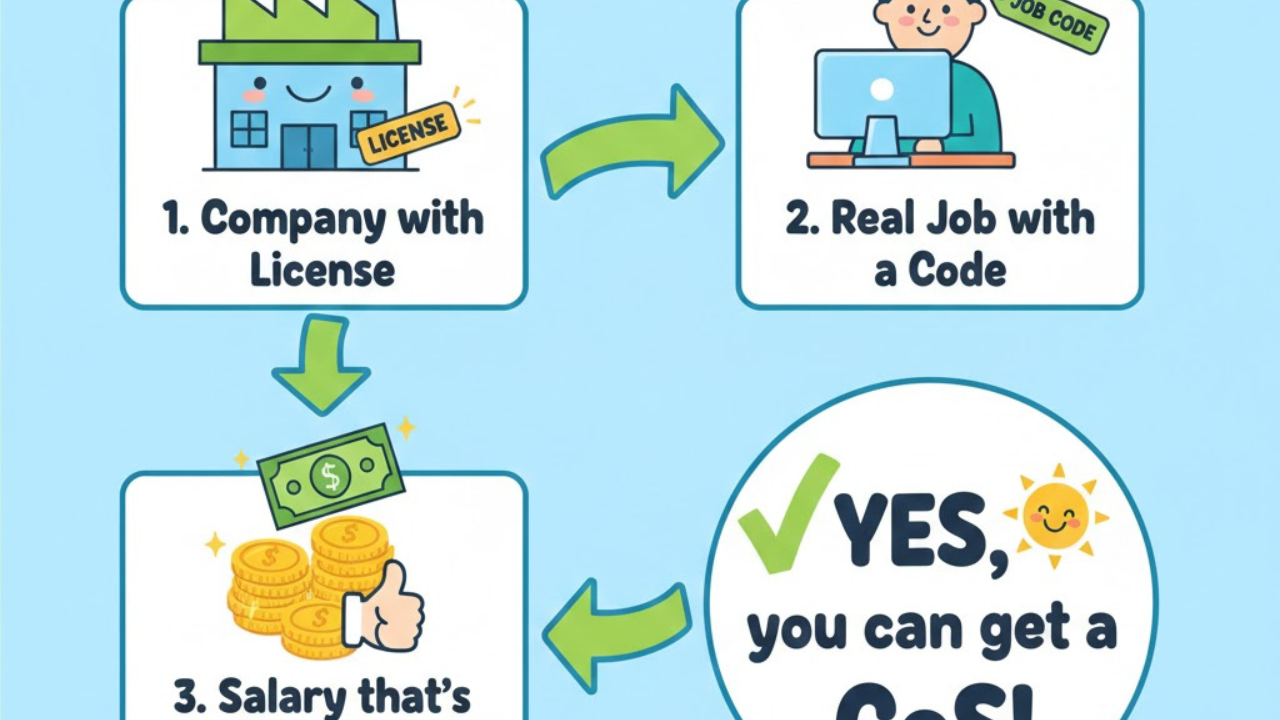
Who makes this secret code? The UK government’s Home Office makes it. But they only give it to special companies that have a Sponsor License. Think of a Sponsor License as a gold star that says, “This company is allowed to invite people to work here.”
Here’s the big thing to remember: The CoS is a promise from the company. It tells the government, “We have a real job for this person, and we checked that they are right for it.” It is NOT a visa. It is a key you need to apply for a visa. It’s like getting a ticket to get on line for a ride—the ticket isn’t the ride itself, but you must have it to get on.
The UK government asks the company to do a lot of the checking. This is the “sponsorship” part. It’s like the company is raising its hand and saying, “We promise this person is coming for a real job, and we will watch out for them.”
 .
.
Types of Certificates of Sponsorship (Critical Distinction)
Did you know there are two main types of CoS? They have funny names: Defined CoS and Undefined CoS. Knowing which one you need is super important!
| Defined CoS | Undefined CoS |
|---|---|
| Used For: People applying for a Skilled Worker visa from OUTSIDE the UK. | Used For: People applying for a Skilled Worker visa from INSIDE the UK (switching visas). Also used for other visas like Global Business Mobility. |
| The Process: The company must ask the Home Office for permission every single time they need one of these for a new worker abroad. It’s like asking for a new ticket every time. | The Annual Allocation: At the start of the year, the Home Office gives the company a bundle of these CoS numbers to use, like a book of tickets. They use them from their bundle as needed. |
| Timing: This request can take longer, sometimes several weeks, because the Home Office checks it carefully. | Timing: The company can usually assign this from their bundle in 24 hours. It’s much faster! |
Why two types? The government wants to check extra carefully on people who are not yet in the UK. The Defined CoS is that extra check.
Eligibility Requirements for Issuance
A company can’t just give out a CoS to anyone. There are very strict rules they must follow.
First, The Sponsor License: The company must have that “gold star” we talked about—an active Sponsor License with an A-rating. If they lose their license or get a B-rating, they can’t issue new CoS numbers.
Second, The Job Itself:
- SOC Code: Every job in the UK has a special number called a Standard Occupational Classification (SOC) code. It’s like a job’s ID number. The company must pick the correct SOC code that matches the job duties. Is it a chef (code 5434)? Or a software developer (code 2136)? Picking the wrong code is a big problem.
- The “Genuineness” Test: The job must be real. The Home Office will check if the company actually needs this job done, or if they just made up the job so someone can get a visa.
Third, The Salary Rules (The Tricky Part!):
This is about money. The job must pay enough. There are two numbers to look at:
- The General Threshold: As of 2024, this is usually £38,700 per year for most people. But there are different rules for some jobs, like health and education.
- The “Going Rate”: This is the typical salary for that specific SOC code. You can find this online. The job salary must be at least the general threshold OR the going rate, whichever is higher.
New 2025/2026 Rules: The salary rules have recently gone up. Companies must be very careful to use the new, higher numbers when they apply.
The Lifecycle of a CoS
Let’s follow a CoS on its journey from start to finish!
Step 1: Allocation
The company logs into a special government website called the Sponsor Management System (SMS). If they need a Defined CoS, they request one. If they use an Undefined CoS, they pick one from their yearly bundle.
Step 2: Assignment
Now they fill in the worker’s details on the SMS: full name, passport number, job title, SOC code, salary, and work start/end dates. One tiny typo in the passport number can cause the worker’s visa to be refused! They must be super careful.
Step 3: Payment
Time to pay! The company pays two costs:
- The Assignment Fee: This is the cost for the CoS itself. It’s usually £239 for a Skilled Worker visa.
- The Immigration Skills Charge (ISC): This is a bigger fee the government charges companies to sponsor someone. It can be £1,000 or £500 per year of the visa! A small company pays less than a big company.
Step 4: Activation
Once paid, the CoS is “Assigned.” The company gives the magic reference number to the worker. The worker now has 3 months to use that number in their online visa application. It’s like the ticket has been activated and will expire if not used.
Step 5: Expiry & Cancellation
- If the visa is approved: The CoS status changes to “Used.” It’s done its job!
- If the visa is refused or the job offer is cancelled: The company must cancel the CoS on the SMS. They might get the Immigration Skills Charge refunded.
Cost Breakdown for Employers
Let’s break down the money part in a simple table.
| Fee Name | What is it? | How Much? (Example) |
|---|---|---|
| Sponsor License | Fee to become a sponsoring company (paid once every 4 years). | From £536 for small companies. |
| CoS Assignment Fee | Fee to assign each Certificate of Sponsorship. | Usually £239 per worker. |
| Immigration Skills Charge (ISC) | Annual charge paid for each worker you sponsor. | Large Sponsor: £1,000 per year. Small/Charity Sponsor: £500 per year. |
| Visa Application Fee | Paid by the worker, not the company. | Can be over £1,500. |
| Healthcare Surcharge | Paid by the worker for using the UK’s NHS. | Over £1,000 per year. |
Exemptions: Sometimes a company doesn’t pay the ISC. For example, if the worker is switching from a Student visa to a Skilled Worker visa, or if they have a PhD-level job in science.
Common Pitfalls and “Red Flags”
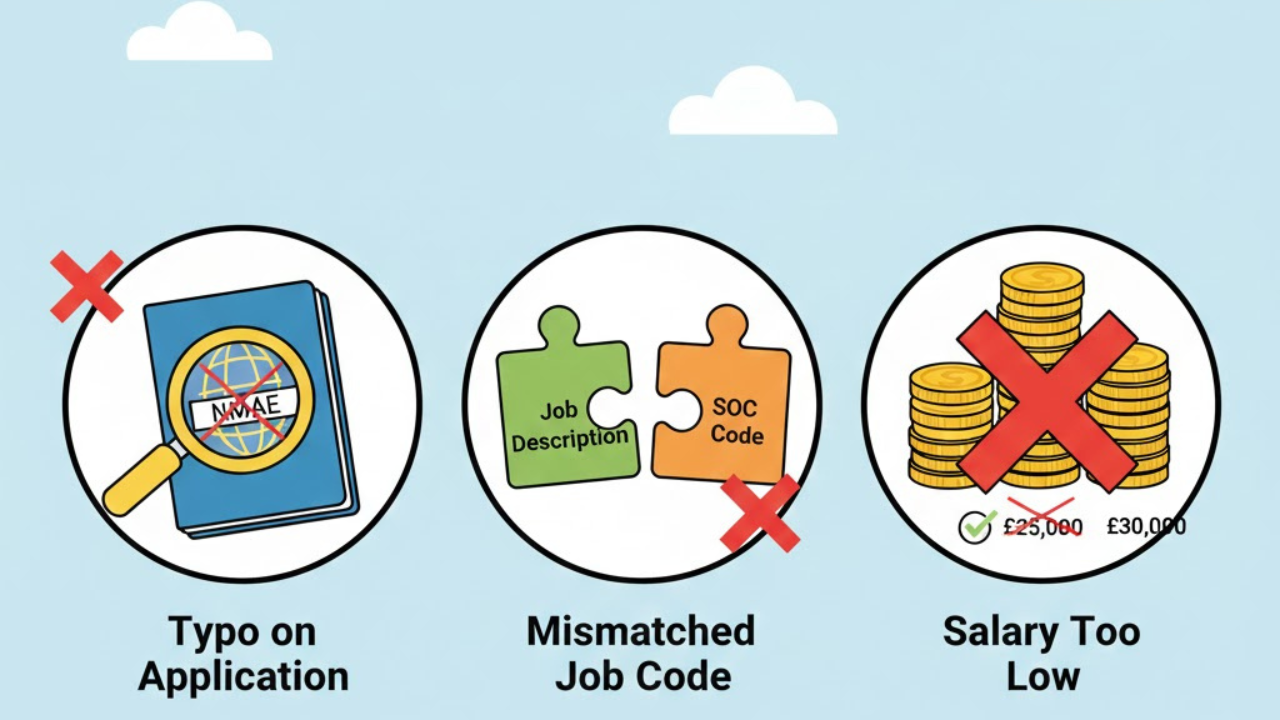
Even careful companies make mistakes. Here are the big ones:
- The Typo Terror: Mistyping the worker’s name, birthday, or passport number. Always double-check!
- The SOC Code Mix-Up: Choosing a code for a manager when the job is for an assistant. The duties in the job offer must match the code’s description exactly.
- The Fake Job Fear: If the Home Office thinks the job isn’t real, they will refuse everything. The company must prove they need this role.
- The Salary Snafu: Forgetting that a part-time salary needs to be “pro-rated” (calculated up) to the full-time equivalent to meet the thresholds. Or just using the wrong “going rate” number.
Post-Issuance Responsibilities (Compliance)
Getting the CoS and visa is not the end! The company has big responsibilities.
- Reporting Duties: They must tell the Home Office within 10 working days if:
- The worker doesn’t show up on their first day.
- The worker leaves the job early.
- The worker’s job changes a lot (like their salary or job title).
- The company moves offices.
- Record Keeping: They must keep copies of the worker’s passport, right-to-work check, and contact details. A Home Office officer can visit anytime to check these files!
- Withdrawing Sponsorship: They must cancel the CoS if the worker leaves. This tells the Home Office the worker is no longer sponsored.
For the Worker: How to Use Your CoS
If you are the worker, here’s what you need to know:
- You Get a Number: Your employer will email you the 9- or 11-digit CoS reference number. It might look like “123456789”.
- You Check It: Make sure every detail (your name, salary, job title) is 100% correct. Ask your employer if you’re unsure.
- You Use It Fast: You have only 3 months from the date it was assigned to enter this number into your online visa application form. Don’t wait!
- The Maintenance Question: On the CoS, there is a section about “maintenance.” This is about proving you have enough money to live on. Sometimes, your employer can tick a box to say they will cover you for your first month. This means you might not need to show your own bank statements. Ask your employer if they have done this for you.
Key Questions This Guide Addresses:
- Can I apply for a visa before my employer assigns the CoS? No. You must have the CoS reference number to even start the visa application.
- Is a CoS the same as a work permit? No. A CoS is a key step to get a work permit (visa). They are different things.
- What is the difference between a Defined and Undefined CoS? This is the #1 confusion! Remember: Defined = applying from outside the UK. Undefined = applying from inside the UK or for other visa types.
- How long does it take to get a CoS approved? For an Undefined CoS from a company’s bundle: as fast as 1 day. For a new Defined CoS: it can take several weeks for the Home Office to approve it.
FAQ
Can my CoS be taken away?
Yes. If your employer loses their Sponsor License, or if they made a serious mistake on your CoS, it could be cancelled.
What if I lose my job after I get my visa?
Your employer will report this to the Home Office. You usually have 60 days to find a new sponsor and get a new CoS, or you must leave the UK.
Does a CoS guarantee my visa will be approved?
No. It is a required part, but the visa officer will also check if you meet English language requirements and have enough personal savings.
Can I change jobs with the same CoS?
No. A CoS is for one specific job with one specific employer. To change jobs, you need a whole new CoS from your new employer.
Conclusion
A Certificate of Sponsorship (CoS) is a crucial digital reference number from a licensed UK employer. It’s the essential permission slip you need to apply for a work visa. Remember the two types: Defined (for those coming from abroad) and Undefined (for those already in the UK).
The process involves careful steps: the employer checks the job and salary, assigns the CoS, pays the fees, and gives you the number. You then use it quickly in your visa application. Both the company and the worker have big responsibilities even after the visa is granted.
Understanding the CoS takes the mystery out of UK work visas. Whether you’re an employer trying to hire the best person for the job, or a worker dreaming of a new life in the UK, knowing these rules is the first and most important step on your journey. Always double-check the details, ask questions if you’re unsure, and when in doubt, seek advice from an immigration expert. Good luck