1. The Growing Demand for Healthcare and Nursing Jobs
Imagine you are a superhero. But instead of wearing a cape, you wear a stethoscope or a pair of comfortable scrubs. That is what it feels like to work in healthcare. You get to help people feel better when they are sick, and you can work in a big hospital or even from your own living room!
The world needs more healthcare helpers right now. Think of it like a giant puzzle. The puzzle pieces are all the sick people who need care, and the people putting the puzzle together are nurses and healthcare workers. Because there are more and more people living longer (we call this an “aging population”), we need more nurses than ever before.
But here is the really cool part. Thanks to magic boxes called computers and something called “telemedicine,” you don’t always have to be in a hospital to help. You can talk to patients through a screen, just like video calling your grandma!
This guide is like a treasure map. It will show you all the different places where you can find Healthcare & Nursing Jobs: Local and Remote Opportunities. Whether you are just starting to think about being a nurse, you are already a nurse but want to work in your pajamas, or you are switching from a different job, this map is for you.
We will answer big questions like: Why does everyone need nurses? Can you really be a nurse from home? And most importantly, do these jobs pay real money? (Spoiler alert: Yes, they do!)
2. Understanding the Healthcare and Nursing Job Market
Before we go looking for treasure, we need to understand the map. The healthcare world is huge, and it is growing bigger every single day.
2.1 Global Demand for Healthcare Professionals
Have you ever noticed that every town has at least one hospital or doctor’s office? That is because people always get sick or hurt, and they always need help. Right now, countries like the United States, the United Kingdom, and Canada are shouting, “We need nurses!” They have a “nursing shortage,” which is a fancy way of saying they have more patients than nurses.
Some special kinds of nurses are needed even more than others. For example, nurses who take care of old people (geriatric nurses) or nurses who help cancer patients (oncology nurses) are like rare Pokémon—very hard to find and very valuable.
2.2 Impact of Technology on Healthcare Jobs
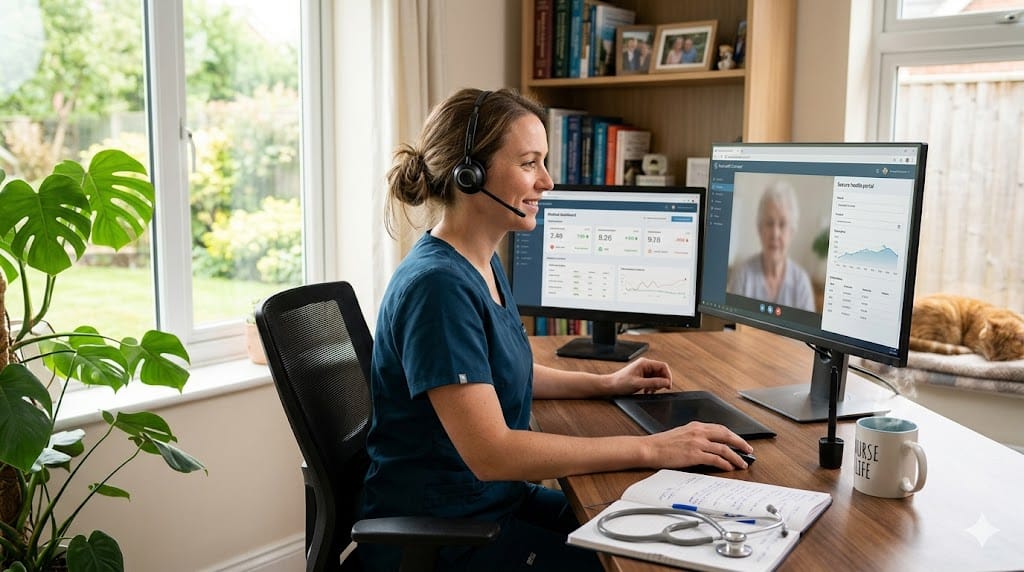
[Image: A friendly nurse wearing a headset, smiling at a computer screen while talking to a cartoon family displayed on the monitor.]
Technology has changed everything. Remember when you had to go to the library to find a fact for a school project? Now you just ask your phone. Healthcare is the same.
- Telemedicine: This is doctor visits over video calls. It means nurses can now work from a home office in Texas and help a patient who lives in Florida.
- EHR (Electronic Health Records): Gone are the days of messy paper files. Now, everything is on the computer. Nurses need to know how to type and click just as well as they know how to take a temperature.
- Remote Patient Monitoring: This is like having a fitness tracker, but for sick people. Machines send information about the patient straight to the nurse, who can watch it from anywhere.
Because of this, nurses now need “digital skills.” That means they have to be friends with computers, not scared of them.
2.3 Benefits of Working in Healthcare
Why should you want this treasure?
- Job Security: This means you will almost always have a job. People will never stop needing doctors and nurses.
- Good Pay: You can make a good living and buy the things you need and want.
- Travel: You can work in almost any country in the world. Your nurse’s license can be your passport!
- Many Choices: You can work with babies, old people, in an emergency room, or at a school. You can even work at a summer camp!
3. Types of Local Healthcare and Nursing Jobs
“Local” jobs are the ones where you have to leave your house. You put on your shoes, drive to a building, and help people face-to-face.
3.1 Hospital-Based Nursing Jobs
Hospitals are like busy cities. They have different neighborhoods (departments), and each needs a special kind of nurse.
- Registered Nurse (RN): This is the main job. An RN does everything—gives medicine, checks on patients, and talks to doctors. They are the captains of the ship.
- ICU Nurse: These nurses work in the Intensive Care Unit. They take care of the sickest patients. It is a very serious job, but very important.
- Emergency Room (ER) Nurse: Imagine a whirlwind of activity. That is the ER. These nurses help people who just had a car accident or a sudden heart attack. They have to think fast!
- Pediatric Nurse: “Pediatric” is a big word for kids. These nurses work with children. They are often good at making kids laugh and feel brave when they are scared.
What do they do all day? They check temperatures, answer call bells, help doctors, and give hugs (when needed). To do this job, you usually need a nursing degree and a license.
3.2 Community and Public Health Nursing
Not all nurses work in hospitals. Some work out in the world, helping whole communities stay healthy.
- Public Health Nurse: These nurses teach people how to stay healthy. They might give flu shots at a school or teach a class about eating vegetables.
- School Nurse: If you scrape your knee at school, you go to the school nurse. They put on band-aids and call your parents if you have a fever.
- Home Healthcare Nurse: Some people are too sick to leave their house but don’t need to be in the hospital. A home healthcare nurse goes to their house to help them.
3.3 Specialized Healthcare Careers
After being a nurse for a while, you can go back to school to learn even more. This is called specializing.
- Nurse Practitioner (NP): This is a nurse who can do many of the things a doctor can do, like prescribe medicine. They have gone to school for a very long time.
- Psychiatric Nurse: These nurses help people who have problems with their feelings or brains (mental health).
- Geriatric Nurse: They are experts in taking care of old people.
Which pays the most? Usually, Nurse Practitioners and nurse anesthetists (the ones who put you to sleep for surgery) make the most money because they have the most training.
4. Remote Healthcare and Nursing Jobs
Now for the magic part—working from home! Thanks to the internet, you can now be a nurse without ever stepping foot in a hospital. These are Remote Healthcare and Nursing Jobs.
4.1 Telehealth Nurse
This is the most common remote nursing job.
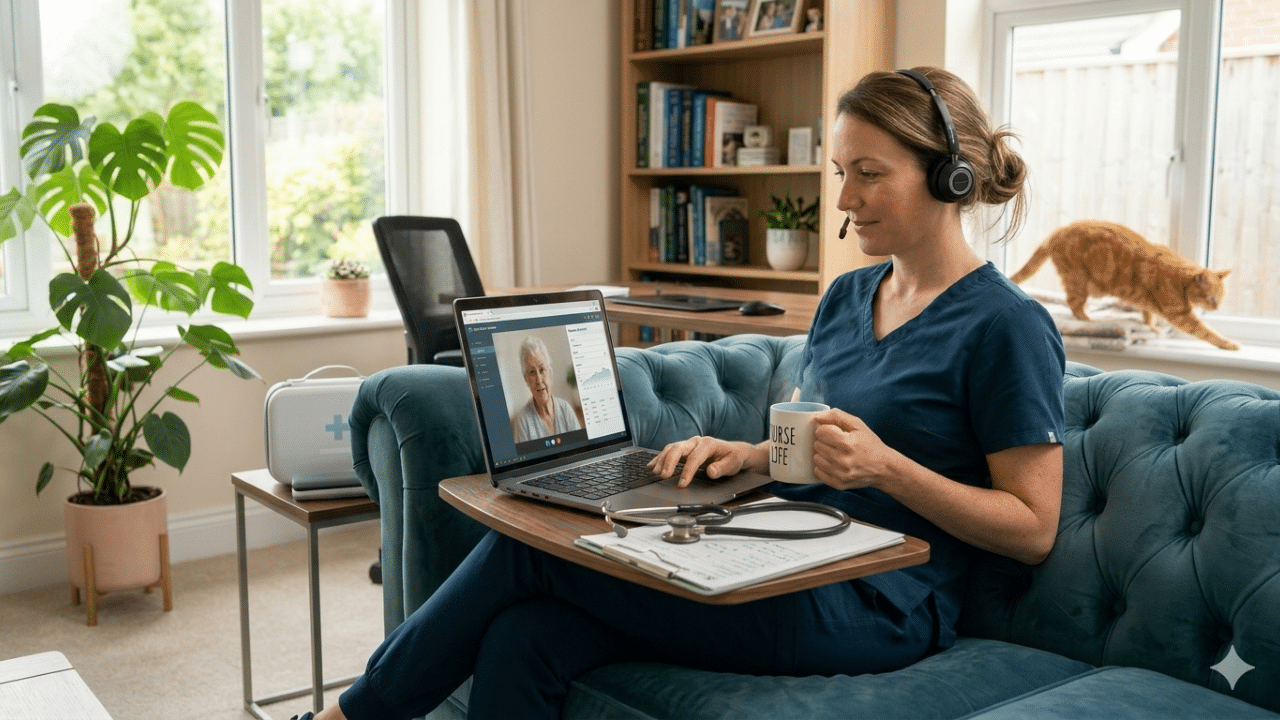
Think of a Telehealth Nurse as a help line for sick people. When you don’t feel well, you might call a number and talk to a nurse. That nurse listens to your symptoms (like “My tummy hurts”) and tells you what to do. Do you need to go to the doctor? Or should you just drink juice and rest?
- Tools of the Trade: They use a computer, a special headset, and secure video software.
- Do they need experience? Yes! Most companies want you to have worked in a hospital or clinic for a few years first so you know what you are talking about.
- Salary: Around $72,000 to $95,000 a year.
4.2 Nurse Case Manager
Imagine you are a project manager, but your project is a person’s health. A Nurse Case Manager makes a plan for patients who are very sick or have been in a big accident. They talk to the patient, the family, the doctors, and even the insurance company to make sure everyone is on the same page.
- Salary: Around $70,000 to $92,000 a year.
4.3 Utilization Review Nurse
This job is like being a detective. The Utilization Review Nurse checks to make sure that the hospital isn’t doing extra tests just to charge more money. They look at the patient’s chart and ask, “Is this X-ray really necessary?” They make sure the care is right and fair.
- Salary: Can be over $100,000 a year.
4.4 Nurse Informaticist
Do you love nursing and also love computers? This is the perfect mix. A Nurse Informaticist is the person who helps design the software that nurses use. They make sure the computer programs are easy to use and help nurses do their jobs better.
- Salary: Around $102,000 a year.
4.5 Legal Nurse Consultant
Nurses can even help lawyers! If someone sues a doctor because they say the doctor made a mistake, the lawyer doesn’t understand all the medical words. They hire a Legal Nurse Consultant to read all the medical records and explain, in simple words, what happened.
- Salary: They often get paid by the hour, sometimes up to $150 per hour!
4.6 Medical Writer or Nurse Writer
Do you like to write stories? Medical Writers write articles about health for websites, magazines, or medicine companies. They explain complicated things so that regular people can understand them.
- Salary: Around $60,000 to $90,000 a year.
5. Qualifications and Requirements
You can’t just wake up one day and decide to be a nurse. You have to go to school and pass some tests.
5.1 Educational Requirements
- Nursing Diploma: You can get one from a hospital school. It takes about 3 years.
- Associate Degree in Nursing (ADN): This takes 2 years at a community college.
- Bachelor of Science in Nursing (BSN): This takes 4 years at a university. Many hospitals prefer this degree.
- Master’s Degree: This is extra school if you want to be a boss, a teacher, or a specialist like a Nurse Practitioner.
For remote jobs, having a BSN or a Master’s degree often helps you get hired faster.
5.2 Certifications That Boost Job Opportunities
A certification is like a gold star that says you are really, really good at one specific thing.
- RN: This is the basic license. You have to pass a big test called the NCLEX.
- CCRN: This is for nurses who take care of really sick patients in the ICU.
- CCM: This is for Case Managers.
- Informatics Certification: This is for the computer-savvy nurses.
These gold stars often mean you get paid more money.
5.3 Skills Needed for Remote Healthcare Jobs
What do you need to be good at to work from home?
- Talking (Communication): You have to explain things clearly without being in the same room.
- Listening (Clinical Judgment): You have to figure out what’s wrong just by listening.
- Computers (Digital Literacy): You need to be able to type fast and not get lost in computer programs.
- Staying Organized: No one is standing next to you telling you what to do. You have to manage your own time.
6. Salary Expectations in Healthcare and Nursing
Let’s talk about the treasure—the money!
| Job Role | Location Type | Average Yearly Salary |
|---|---|---|
| Registered Nurse (Hospital) | Local | $75,000 – $100,000 |
| Telehealth Nurse | Remote | $72,000 – $95,000 |
| Nurse Case Manager | Remote/Local | $70,000 – $92,000 |
| Nurse Practitioner | Local | $110,000 – $130,000 |
| Nurse Informaticist | Remote/Local | $95,000 – $115,000 |
| Utilization Review Nurse | Remote | $85,000 – $110,000+ |
Question: Are remote jobs as profitable?
Answer: Yes! Often, they are just as good. You also save money on gas and eating out for lunch, so you might actually have more money in your pocket.
7. Best Platforms to Find Healthcare and Remote Nursing Jobs
Where do you look for these jobs? You can’t just walk into a hospital and ask for a computer to work from home. You have to know where to look.
- Online Job Boards: Websites like Indeed, LinkedIn, and Glassdoor list thousands of jobs.
- Healthcare Staffing Agencies: These are companies that help nurses find jobs. They are like matchmakers for work.
- Telehealth Company Websites: If you want to work for a specific company like Teladoc or Amwell, you should go directly to their website and look under “Careers.”
- Hospital Websites: Even for remote jobs, sometimes your local hospital has a “virtual care” department.
8. How to Transition From Hospital Nursing to Remote Work
So, you are a nurse in a hospital, but you want to work from home. How do you make the switch? Here is a step-by-step guide:
- Get Experience: Most remote jobs want you to have at least 2 or 3 years of working in a real hospital first. This proves you know your stuff.
- Learn the Tech: Get comfortable with computers. Learn how to type quickly.
- Get Certified: Consider getting a certification in case management or telehealth.
- Update Your Resume: Make sure your resume mentions that you are good at explaining things to patients and that you can use computer programs.
- Start Applying: Look for “entry-level” remote jobs like “Telehealth Triage Nurse.” That means you are answering the phones and deciding how sick people are.
9. Challenges of Remote Healthcare Jobs
It’s not all cupcakes and coffee. Working from home has some tricky parts.
- Licensing Rules: In the US, you usually need a nursing license for the state where the patient lives. So if you live in Florida but want to help a patient in New York, you might need a New York license. That can be a hassle.
- Staying Private: Nurses have to be very careful about patient secrets. You have to make sure no one in your house can hear the private video calls.
- Missing People: Some nurses miss the face-to-face time with patients. They miss holding someone’s hand or giving a real hug.
- Internet Problems: If your Wi-Fi goes out, you can’t work!
10. Future Trends in Healthcare and Remote Nursing Careers
What will healthcare jobs look like when you grow up?
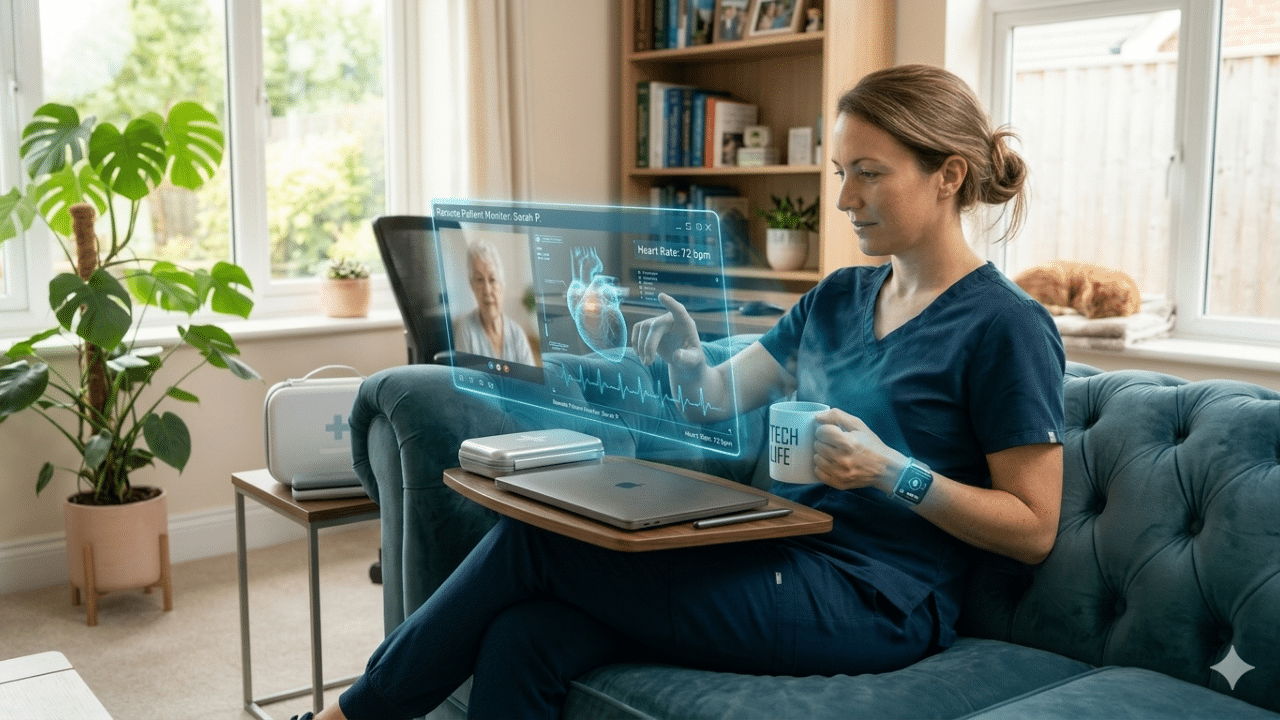
- More Telemedicine: It will be totally normal to see a doctor on a screen.
- AI Helpers: Computers will help nurses figure out what is wrong with patients faster.
- Wearable Watches: More people will have smartwatches that tell the nurse if they fall down or if their heart is beating too fast.
- Global Jobs: Nurses might work for hospitals in other countries, all from their home office.
11. Tips for Landing High-Paying Healthcare Jobs
If you want the biggest treasure chest, follow these tips:
- Pick a Specialty: Don’t just be a “regular” nurse. Become a specialist in something, like the heart or the brain.
- Never Stop Learning: Keep getting those gold stars (certifications).
- Network: Talk to other nurses. Join online groups. Sometimes jobs are found through friends.
- Love Technology: The more you know about computers and new gadgets, the more valuable you are.
- Be Kind: Always be nice to patients. A good reputation goes a long way.
12. Conclusion
The world of Healthcare & Nursing Jobs: Local and Remote Opportunities is like a giant playground with many different swings and slides. Whether you want the excitement of a hospital emergency room or the quiet comfort of a home office, there is a place for you.
Nursing is a job where you can make a real difference. You can hold a patient’s hand in a local clinic, or you can guide a worried mom through a fever over a video call from your living room. Technology is making it possible to help people in ways we never thought possible.
If you are kind, like to help people, and are ready for an adventure, healthcare is the perfect path for you. The jobs are waiting. Go find your treasure!
FAQ
1. Can nurses work remotely?
Yes! Many nurses work remotely as telehealth nurses, case managers, or consultants. They help patients over the phone or computer.
2. What is the highest-paying remote nursing job?
Jobs like Nurse Informaticist, Nurse Consultant, and Utilization Review Nurse often pay over $100,000 per year.
3. Do remote nursing jobs require bedside experience?
Most do. Employers usually want you to have 2 to 3 years of experience working in a hospital or clinic so you have the knowledge to make good decisions on your own.
4. Are remote healthcare jobs legitimate?
Absolutely. Many big hospitals, insurance companies, and special telehealth companies hire nurses to work from home. They are real jobs with real salaries.
5. Which countries offer the best healthcare job opportunities?
The United States, Canada, the United Kingdom, and Australia are always looking for nurses. They often have programs to help nurses from other countries move there to work.